
Mobile marketing tips for small businesses
Mobile marketing tips for small businesses

Jun 30th
Many businesses that want to increase revenue often focus exclusively on gaining new customers. But while this can have tremendous long-term benefits, there’s another strategy that shouldn’t be ignored: boosting sales from existing customers.
Existing customers already enjoy your product, and selling to them should be significantly easier than selling to strangers. For that reason, it can often be quite cost-effective to boost revenue by expanding relationships with customers you already have. The following tips are useful strategies that you can employ to do that.
1. Look for natural upsells
Unless your business only offers a single product, you may be missing opportunities to upsell to existing customers. If they need one solution in your industry, they may need related items as well. For example, resellers that offer mobile app development using our platform might want to also offer mobile websites to existing customers. These folks have already demonstrated an interest in pursuing mobile strategies, and it wouldn’t be surprising if some of them wanted to explore the possibility of using multiple channels at the same time in order to enhance their mobile presence.
2. Study your customers and listen to them
Nothing could be more valuable than customer feedback and customer activity analytics (if applicable to your industry). By listening to what your customers want, you’ll likely learn which gaps in your offering need to be filled. These missed opportunities often represent additional income you could be earning by solving problems of customers, and may help you boost average customer spend.
3. Reward loyalty
This is probably an obvious strategy, but it is also a powerful one that we didn’t want to leave out. If increased spending leads to rewards at your company, you’ve set up an incentive structure than can help boost revenue. If you’re concerned about adding revenue only to give it back in the form of rewards, remember that rewards don’t have to be costly. If you’re creative, you can find ways to show appreciation to loyal customers that don’t cost you anything (check out our post on boosting loyalty through apps for more on that topic).
4. Share promotions with existing clients
All of those great promotions you come up with to gain new customers can sometimes serve a dual-purpose. When you run a new promotion, consider offering something similar to your current customers, as well. Some teaser discounts and other things will be inappropriate, of course, for sharing with your existing customers. You don’t want to cannibalize your own revenue base. Other offers, however, might fit. Keep current customers in mind and strive to run concurrent promotions where it makes sense to do so.
5. Keep in touch
Spam is bad, but the occasional message to your customer base is a good idea. You generally want to stay top-of-mind, and a decent sales boost can often come through simply putting yourself in front of your customers. This doesn’t have to mean a formal offer or solicitation. Sometimes a friendly, “Hello!” or other communication is all you need.
Jun 25th
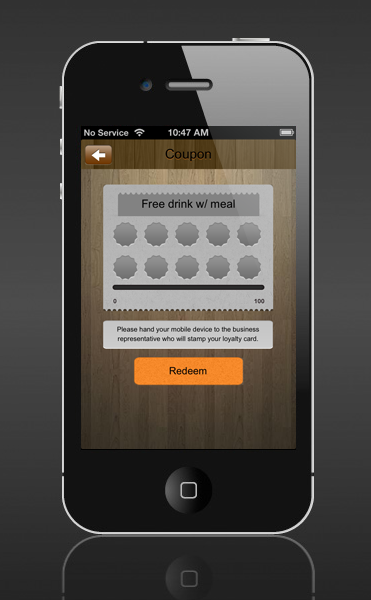 Make new friends, but keep the old, right?
For businesses, this means increasing customer loyalty. Loyal customers are the key to long-term success, and the more you have, the more you know your business is on the right track. So, what’s a great strategy for increasing loyalty and deepening the bonds with your customers?
An app!
Apps are tremendously cost effective, and because mobile devices are always with us, they provide businesses with an opportunity to connect with their customers wherever they are. To that end, below are five tips you can use to create an app that keeps customers satisfied and coming back for a long time to come.
1. Target loyal customers
Not every ad, feature, or app description should be all about bringing new customers on board. Sometimes, it pays to provide some attention to existing customers, and to shape messaging to speak directly to them. This helps your loyal clients feel appreciated, and reminds them that your business doesn’t forget about people once they’re through the front door. With the Bizness Apps loyalty tab you can increase customer loyalty, engagement inside of your mobile app, and repeat customers.
Check out additional information on our loyalty tab here.
2. Deliver great content
Make sure that your app is about what it provides to users, not about what your business can get from it. If you focus on the experience users have, instead of simply generating more downloads and promoting products, they’ll have a reason to keep using it. That way, it becomes a tool for increasing customer satisfaction, and ultimately drives the sales and referrals you’re looking for (in the right way and for the right reasons).
Check out additional information on our news tab here.
3. Don’t be a one-night stand
Once your app launches, that’s just the beginning. Solicit feedback, implement sensible suggestions, and continue to tweak your app. Measure and analyze activity on your offering, and look regularly for ways to improve. Many of your competitors are always attempting to get better. If you’re not improving, you might actually be falling behind.
4. Be social
Provide users with a means to share your app, it’s content, and their activity on it. This will enable them to spread the word about your business, but also keep up with fun features that they’ve come to expect and enjoy.
Check out additional information on our tell-a-friend tab here.
5. Provide a fast and seamless experience
In the mobile world, nothing’s more useless than an app that doesn’t work. Your app should function as advertised, and should also do it well. If your app works smoothly and quickly, users will enjoy using it. If it doesn’t, it’s headed to the trash bin for sure.
Follow these tips, and you’ll build relationships that last with your customers, keeping the future of your business bright, and providing for continued growth using the power of the surging mobile marketplace.

Mar 8th
The costs of poor customer service are well known. If a customer has a bad experience, they will tell an average of 9-15 people, according to the Office of Consumer Affairs. Naturally, those people will probably then steer clear of your business in the future. To avoid this happening, you need to provide outstanding service, which is the key to developing customer loyalty. Below are a few tips that will help you keep your customers happy and loyal:
1. Respond quickly
Companies that respond to customer inquiries in less than 10 hours have an average satisfaction rating of 90%. It’s an on-demand world, and it’s now more important than ever to be responsive to customers. The faster you respond, the more it shows you respect them and their time. If they have to wait too long, or they feel ignored, they’re gone.
2. Analyze customer behavior
There are many ways to do this, and selecting the proper tool will depend on the nature of your business. But whether you use a Customer Relationship Management solution, a website tracker, or some other means of capturing customer behavior data, the important thing is that you do it. Without capturing data, you’re missing out on critical feedback that will tell you if all your clever business plans are paying off, or if they’re turning people off.
3. Let the customer lead
Then listen and respond in the way that works best for them. Don’t ask customers to conform to your program rigidly, unless you can make it very painless to do so through great instructions and a system that is 100% reliable and proven. Otherwise, work with customers not just to make them happy, but to make them happy in the way they want. This could mean sending emails when you would prefer to use phone calls, guaranteeing turnaround times, creating a night shift to meet demands, or other creative solutions. The point is, the customer is ultimately in the driver’s seat. Businesses that forget this will be forgotten.
4. Simplicity
Don’t complicate things. Don’t ask customers to wade through long texts or informational videos. Don’t make it hard for people to use your product or service.
Keep it simple.
Simple is easy, and easy is what everyone wants in this overworked world of ours. If you make people’s lives easier, they will beat a path to your door.
5. Deliver
If you make a commitment, you have to deliver on it, or your credibility will be shot and so will your business. Of course, even the best operator may make a mistake, sometimes, and then the most important thing to do is to apologize and work tirelessly to make it right. Most customer service boils down to respecting people’s time, energy, and the business they bring you. If you don’t deliver, AND you don’t make it right … that 9-15 person figure above? You can probably expect it to increase significantly. With services like Consumerist and Yelp reviews, a single bad experience can cut your revenue significantly, and even destroy your business.
6. Reward continued business
If you’ve got customers than return to you time and time again, sweeten the pot a little with a reward. It doesn’t have to be an elaborate program or a huge gift, just a nice gesture. “Buy x, get one free” is a common one for small-transaction retailers, but you are fairly free when it comes to rewards. A gift card to a coffee shop around Christmas, a basket of wines, or, for large accounts, free cruises and the like are all great ways to remind customers that you appreciate their business.
Remember, a customer saved is a customer earned, so whenever you can, give the people what they want!
Feb 21st
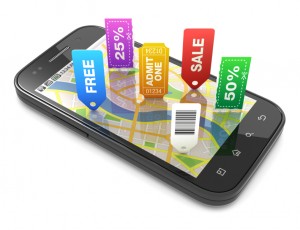 Coupons have been with us for ages, but mobile coupons are a new and steadily growing slice of the market that present exciting opportunities for developers and merchants alike.
Last year, about were 92.5 million digital coupons were redeemed. Most were online coupons redeemed while shopping on a desktop or laptop. 16.3% of mobile users, however, also redeemed a mobile coupon using their device last year. This figures is growing at a few percent each year, and total mobile coupon redemptions are expected to reach 53.2 million by 2014.
Apps for mobile couponing are constantly being released to meet demand for these mobile deals. Some offer rich functionality, allowing users to scan barcodes of products to find deals, display coupons for scanning at registers, and earn rewards simply for entering a store and launching the app. Some of these apps are still a bit buggy, however. Technical issues involving redemption at point of sale are well documented, but improvements are always under development.
In addition, certain register software platforms allow for entry of texted coupon codes, which skirt these problems. In fact, according to certain polls, users generally prefer to receive mobile coupons via SMS or display them for scanning at a register, and are redeeming mobile coupons at 10 times the rate of print coupons (10% versus 1%). Indeed, some shoppers are considering cancelling subscriptions to newspapers they were maintaining solely for the coupons, because digital coupons are meeting all their needs. For advertisers, this factor is strongly in favor of focusing on mobile coupons, as opposed to traditional print circulars.
Delivery methods vary widely. Scanning QR codes, checking in on an app, tapping a point-of-sale terminal, or using digital “loyalty cards” are all ways for consumers to make use of mobile coupons. But some in the industry have noted that many users are reluctant to adopt technological developments, which holds some of these methods back. Naturally, the more friction points there are, the less likely people are to actually redeem a coupon.
Regardless of these difficulties, mobile coupon use continues to grow, and retailers, developers, advertisers, and other industry players should consider including mobile coupons in their strategies going forward. Opportunities abound, and the technology is still in a relatively early phase, allowing nimble players to get in on the ground floor of a developing market.
And that’s just good business.
 Previous Blog Posts